


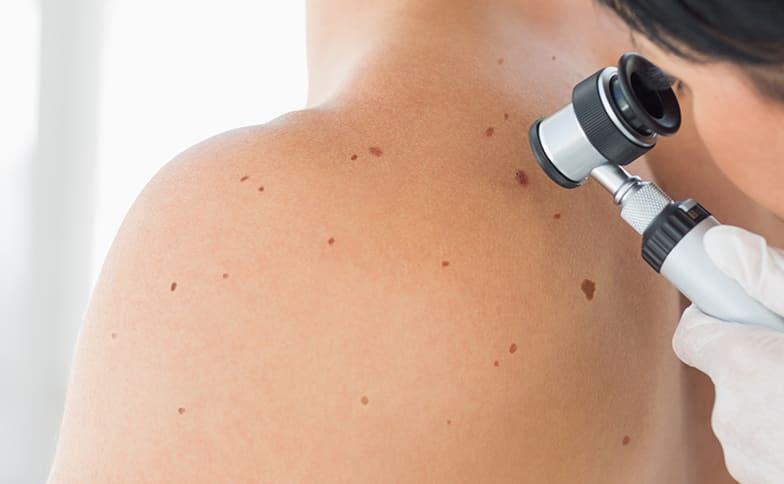
Skin health plays a fundamental role in overall well-being. Dermatologists use their specialized expertise to recommend prevention strategies, and they perform regular screenings. They also provide clear education about maintaining skin health, helping you take proactive steps that protect you long-term. Here’s how dermatologists assist with skin cancer screening and prevention:
Conducting Thorough Skin Examinations
A key way dermatologists contribute to skin cancer prevention involves full-body skin examinations. During these appointments, the dermatologist inspects your skin for atypical spots, moles, or lesions. With a magnifying instrument, they can achieve a highly detailed assessment, examining features that are difficult to see with the unaided eye. These examinations establish a fundamental baseline for your skin. Your dermatologist documents the appearance and location of your moles and skin spots; this provides them with specific reference points for future visits. Regular monitoring can make it easier to spot changes in your skin over time, which is helpful for early detection.
Offering Personalized Prevention Strategies
Each patient has a unique set of skin qualities and risk factors, including whether they have fair skin or a large number of moles. To tailor prevention, dermatologists contemplate a range of details, such as your skin type, genetics, and lifestyle habits. These individual discussions form the basis for practical, personalized advice, and they can support your efforts to minimize risks. Possible advice includes:
- Prioritizing a broad-spectrum sunscreen suitable for your skin.
- Using hats or protective clothing, particularly during peak sunlight hours.
- Finding shade and planning outdoor activities with sun exposure in mind.
Teaching Effective Self-Screening Techniques
Alongside professional evaluations, dermatologists instruct you on how to conduct self-exams at home; this is a key habit in skin cancer prevention. They explain which signs to watch for, such as shifts in size, shape, color, or texture of moles. By learning what is typical for your skin, you can strengthen your ability to notice new or changing areas promptly.
Knowledge of self-exams is helpful between professional check-ups. This approach makes sure you take an active role in your skin’s care, and if you identify something unusual, you know when to schedule an expert evaluation. Specific signs to look for include moles with uneven shapes, irregular borders, varied colors, or increasing size.
Navigating Next Steps
If a dermatologist observes an unusual area during an exam, their next steps focus on determining the cause and planning appropriate follow-up care. They outline observations, and they discuss possible follow-up actions, such as closer monitoring or a sample collection for laboratory review. If any intervention becomes necessary, the doctor can help you understand the process and what will happen next. Potential next steps include performing a minor surgical removal or recommending more frequent skin checks.
Partner With an Experienced Dermatologist
Dermatologists play a key part in protecting your skin health; they assist with preventive screening, early detection, and treatment. These professionals perform detailed exams with specialized instruments, and they can help you develop healthy habits by educating you about self-monitoring. If you have questions about your skin health or want guidance on establishing a screening routine, schedule a consultation with a dermatologist today.