

Regular eye exams play a significant role in protecting your vision and detecting potential issues early. A comprehensive exam checks how clearly you see and evaluates the overall health of your eyes, from the retina to the optic nerve. Here is what you can expect during a comprehensive eye exam:
Reviewing Your History
The eye exams begin with a discussion about your medical and vision history. Your doctor needs to understand your background to identify potential risk factors for specific eye conditions. They will ask about any medications you currently take and if you have noticed any recent changes in your vision.
It is helpful to bring a list of your current prescriptions and any eyewear you currently use. This information helps the doctor determine if your current vision correction is still adequate or if changes are necessary. They will also likely ask about your family history of eye diseases such as macular degeneration or glaucoma.
Testing Vision Basics
The initial part of the examination focuses on how well you can see objects at various distances. These eye exams evaluate your visual acuity and determine the specific lens power required to correct refractive errors. Here are some of them:
- Visual Acuity Test: This is the familiar chart with letters that get smaller as you read down the lines.
- Refraction Assessment: The physician uses a device called a phoropter to present different lens options; this process determines your exact prescription for glasses or contact lenses.
- Eye Muscle Test: This checks the muscles that control eye movement to make sure they work together properly and look for any weakness or poor coordination.
- Color Vision Testing: This screening checks for color blindness or deficiencies in your ability to distinguish certain colors.
These preliminary tests provide baseline data to correct your vision, but they are only the first step in the process.
Examining Eye Health
After assessing your vision, the optometrist performs specific tests to examine the ocular structures. These procedures are key to detecting diseases that can lead to vision loss if left untreated. Here are some of them:
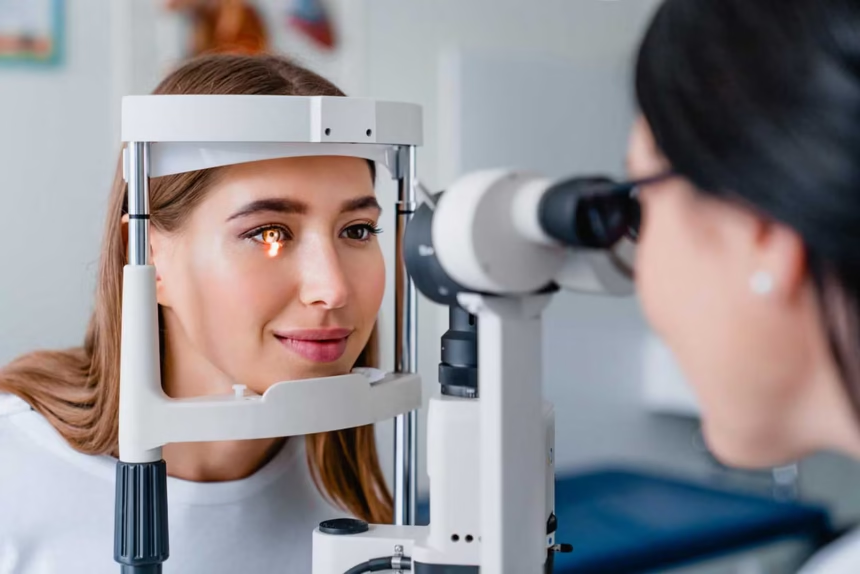
- Slit-Lamp Examination: The doctor uses a microscope with a bright light to check the cornea, iris, lens, and eyelids for any signs of infection, cataracts, or scratches.
- Retinal Examination: Your physician may use eye drops to dilate your pupils to visualize the retina, optic nerve, and blood vessels, and to screen for conditions such as diabetic retinopathy.
- Glaucoma Screening: This test measures the pressure of the fluid inside your eyes using a technique called tonometry.
- Visual Field Test: This assessment checks your peripheral or side vision to diagnose nerve damage or other neurological issues that may affect your field of view.
Once these evaluations are complete, the doctor will have a comprehensive picture of your internal and external eye health.
Navigating Post-exam Care
After the testing is finished, your optometrist will review the results with you in detail. If your eyes were dilated, your vision will remain blurry for a few hours, and you will be sensitive to light. Bring sunglasses to wear while your eyes recover from the drops.
The doctor will explain any changes in your prescription and recommend the best corrective lenses for your lifestyle. They may also recommend specific lens types, such as progressives or blue-light filters, based on your daily activities. If any eye health issues were discovered, they will discuss treatment options or preventive measures you can take. You may receive a referral to a specialist if the doctor detects a condition that requires advanced care.
Schedule Your Routine Eye Exams
Regular eye exams are the most effective way to protect your vision and maintain healthy eyes. They provide a key opportunity to correct vision changes and detect serious health problems early. Contact your local optometrist to schedule your comprehensive eye exams today.