

Ankle replacement surgery is a procedure where damaged areas of the ankle joint are replaced with artificial components. People typically pursue this procedure when ankle arthritis or injury interferes with daily activities or causes ongoing discomfort. After the procedure, a detailed recovery plan is created, and following postoperative exercises is a key step in the healing process. Here are three postoperative exercises to help with recovery after an ankle replacement:
1. Supporting Range-of-Motion and Circulation
Restoring movement and encouraging healthy circulation are top priorities soon after surgery. Your physical therapist may start you with gentle movements, focusing on keeping blood moving in your legs while also protecting your new joint. A common exercise is the ankle pump. This involves lying on your back, legs out straight, and slowly pointing your toes away from your body before pulling them back toward your nose. Repeating this movement several times helps maintain flexibility and encourages fluid movement, which may help with swelling.
Another exercise often introduced is the ankle alphabet. While you are sitting or lying down, try to “draw” each letter of the alphabet in the air with your big toe. Go at your own pace and focus on moving the joint smoothly rather than rushing. This exercise encourages the ankle to move in all directions, prompting the ligaments and muscles to remain mobile during the early recovery phase. Some therapists also recommend gentle toe curls or spreading your toes apart and back together to facilitate circulation in your foot. These types of exercises are typically performed in short sessions throughout the day.
2. Building Strength
Once swelling is controlled, your rehabilitation usually moves to include more active strengthening. Targeting the muscles around the ankle is a gradual process. Calf raises are a foundational exercise. Stand behind a sturdy chair or countertop and gently lift your heels so you rise onto the balls of your feet, then lower back down. You should begin with a few repetitions and gradually increase as you gain control.
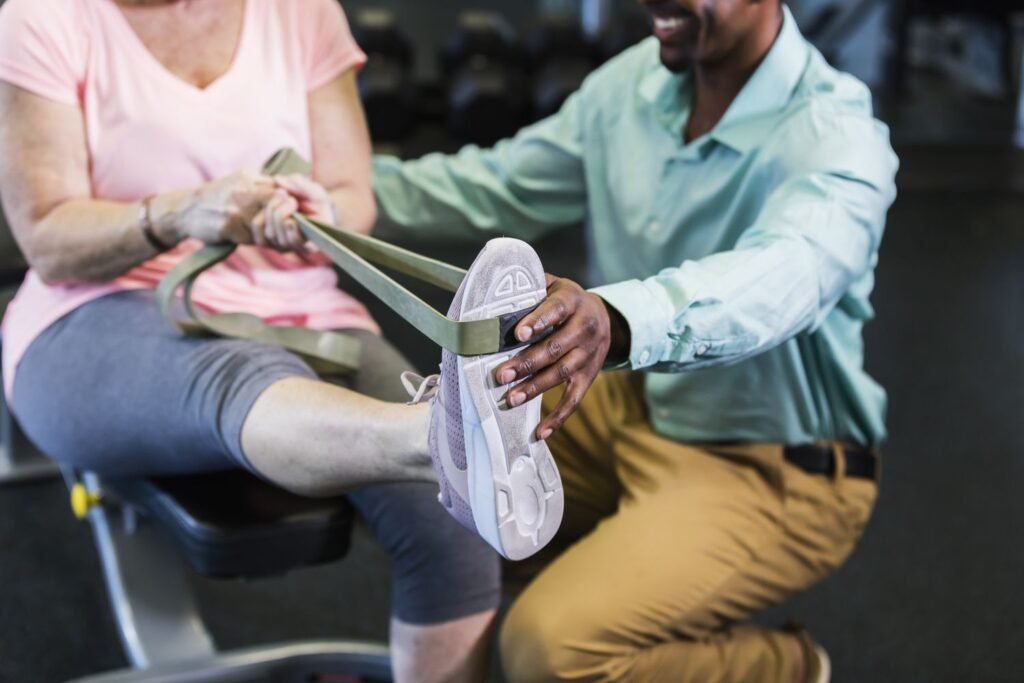
Resistance bands are also a helpful tool. While seated, loop a band around the ball of your foot and hold the other end in your hands or anchor it to a steady object. Point your toes against the resistance, then draw them back toward you. This movement helps strengthen the calf, shin, and other ankle-supporting muscles.
Leg presses, bridges, and seated marches may also become part of your routine over the following weeks. Being patient as you progress is key, as every joint heals at a different pace. Your physical therapist will monitor your form, answer your questions, and help you incorporate strengthening into your daily routine. Building supportive muscles helps foster stability and make everyday movements easier.
3. Increasing Balance and Stability
Regaining steady balance is a key focus during ankle replacement recovery. Your physical therapist might add specific balance drills once you’re ready for weight-bearing activity. Early activities may involve standing on both feet and gently shifting your weight from side to side. As you progress, you may work toward standing on your surgical leg for several seconds, using a sturdy countertop for balance support. When this feels steady, your therapist might introduce new challenges, such as:
- Placing a folded towel or pillow under your foot, which encourages your ankle to respond to small shifts
- Slowly lifting and lowering your unaffected foot while holding on for balance to target the stabilizer muscles in your legs
- Walking on your tiptoes or heels to build stability
Learn More About Ankle Replacement
Structured postoperative exercises support recovery after ankle replacement. A physical therapist creates a personalized plan tailored to your surgery, current abilities, and goals, guiding you at every step. Progress often occurs over time, but every day adds to your strength, comfort, and ease of movement. Contact an orthopedic surgeon today to schedule an ankle replacement surgery.