

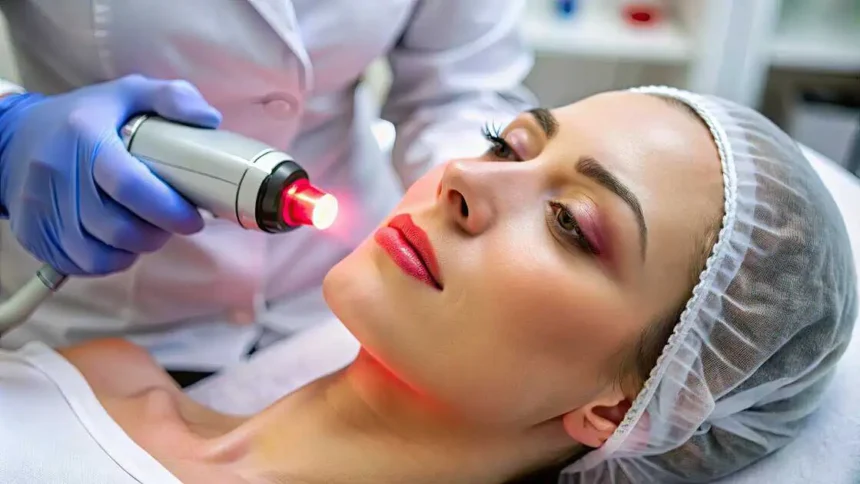
Laser treatments use focused light to address various skin conditions, and this technology targets specific skin structures. While many treatments exist, they operate on similar principles of light and heat. Understanding the science behind these procedures can help you be more informed about the process. Here is more information on how different light-based technologies interact with your skin:
Intense Pulsed Light
Intense pulsed light (IPL) is a technology that uses multiple wavelengths of light. Since different filters are used during treatment, the device emits a broad spectrum of light. Specific targets in the skin absorb the light energy. These targets are known as chromophores.
IPL devices emit light in quick, powerful flashes, and the light penetrates the skin to reach the dermis below. When the target absorbs light energy, it is converted to heat. This process is called selective photothermolysis. While leaving the surrounding tissue unharmed, it allows the treatment to affect a specific area.
The heat generated by the IPL device works on pigmented or vascular irregularities. This targeted heat breaks down the pigment or collapses the blood vessel. After this step, the body’s processes begin to clear the treated cells. The procedure is non-ablative, which means it does not remove the top layer of skin.
New Collagen Production
Collagen is a protein that provides structure to your skin. The heat generated by light-based treatments stimulates fibroblast cells, which produce new collagen. This response is part of the body’s healing process. Over time, this new collagen forms within the dermis.
Broadband Light
Broadband light (BBL) is an advanced form of IPL technology. It uses a broad range of light wavelengths. This allows the treatment to be customized for different skin types and conditions. A BBL device can be adjusted to target various concerns during a single session.
BBL technology delivers light energy in rapid, high-intensity pulses. During the procedure, the device features advanced cooling that helps maintain a comfortable skin temperature. This may make the treatment experience more manageable for you. The BBL settings are precise, and an operator can adjust the following:
- Wavelength
- Pulse duration
- Temperature
The light energy penetrates the skin to reach its intended targets. When light is absorbed by melanin, it is absorbed by pigmented spots. When focusing on vascular issues, the hemoglobin in blood vessels absorbs the light. The heat generated then breaks down these targets, and the body works to remove them.
Reduced Facial Irregularities
Many facial irregularities are related to pigment or vascular issues. Because light treatments target melanin, they work on areas of excess pigmentation. These treatments deliver precise wavelengths of light that the pigment absorbs. This light converts to heat, which breaks up the pigmented cells.
Similarly, light-based treatments address vascular irregularities, such as redness or small blood vessels. The light energy is absorbed within these vessels, and the resulting heat causes them to collapse. After laser treatment, the body naturally absorbs the treated vessels. This process aims to reduce their appearance on the skin.
Schedule Laser Treatment Today
Understanding the science behind laser treatments provides a clear picture of how they work. These procedures use light and heat to target specific structures in the skin and can address pigmentation and stimulate collagen production. If you have questions about how these treatments may apply to you, speak with a professional. Schedule a consultation to discuss your skin and learn more about your options.