

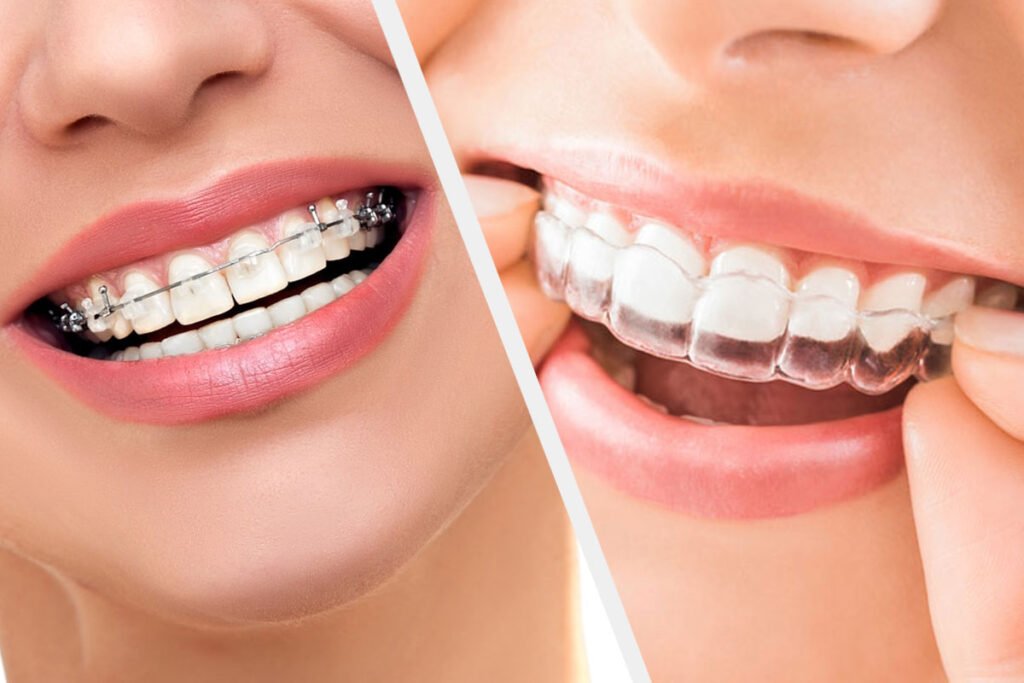
When exploring orthodontic and cosmetic dentistry options, patients often look into two primary methods for straightening teeth: traditional braces and clear aligners. Both approaches effectively align teeth and correct bite issues, but they differ in appearance, functionality, and overall treatment experience. Cosmetic dentistry treatments, such as teeth whitening or veneers, can further enhance smiles once orthodontic care is completed. Understanding these distinctions allows patients to make informed decisions tailored to their needs, lifestyle, and aesthetic goals.
Braces: Key Features
Traditional braces consist of metal or ceramic brackets bonded to each tooth. These are connected by archwires that apply continuous pressure to gradually move teeth into proper alignment. The system also includes elastic bands or ligatures. These secure the wire to the brackets, creating a network that guides tooth movement and alignment. Modern braces come in various materials, including stainless steel, ceramic, and even gold, catering to different aesthetic preferences.
The fixed nature of braces means patients cannot remove them during treatment, requiring consistent oral hygiene practices and dietary modifications. Adjustments occur every four to six weeks, during which orthodontists adjust wires and replace elastic components to maintain proper pressure and progress toward treatment goals. In addition to braces, cosmetic dentistry options like teeth whitening or veneers can further enhance the appearance of your smile once treatment is complete.
Aligners: Key Features
Clear aligners present several distinctive characteristics that set them apart from traditional braces:
- Removable plastic trays custom-made from digital impressions of the patient’s teeth
- Nearly invisible appearance when worn, making them aesthetically appealing
- Sequential treatment using multiple aligner sets, typically changed every one to two weeks
- Computer-generated treatment planning that maps the entire tooth movement process
- Smooth plastic construction without metal components or sharp edges
Braces: Main Benefits
Traditional braces offer superior control for complex tooth movements. They can effectively treat severe orthodontic issues that aligners may not address. The wire and bracket system applies continuous pressure, provides consistent tooth movement without relying on patient compliance. This makes braces especially effective for significant bite corrections, severe crowding, or substantial tooth rotations. Their durable metal components reduce the need for replacements or repairs, improving treatment efficiency and predictability.
Aligners: Main Benefits
Clear aligners provide numerous advantages that appeal to many orthodontic patients:
- Enhanced comfort due to smooth plastic surfaces without metal brackets or wires
- Improved oral hygiene capabilities since aligners can be removed for brushing and flossing
- Dietary freedom allows patients to eat any foods without restrictions
- Reduced emergency appointments since there are no broken brackets or protruding wires
- Predictable treatment visualization through computer modeling before treatment begins
Explore Cosmetic Dentistry Options
The choice between braces and aligners depends on factors like case complexity, age, lifestyle, and personal preferences. Severe orthodontic issues such as malocclusions or extensive root repositioning often require the precision of braces, while aligners rely heavily on patient compliance, requiring all-day wear to be effective. Fixed braces may be better suited for individuals who might forget or misplace aligners, while adults often prefer the discreet appearance of aligners. Both options can deliver excellent results when selected and managed properly. To determine the best option for your needs, consult a qualified orthodontist today.