


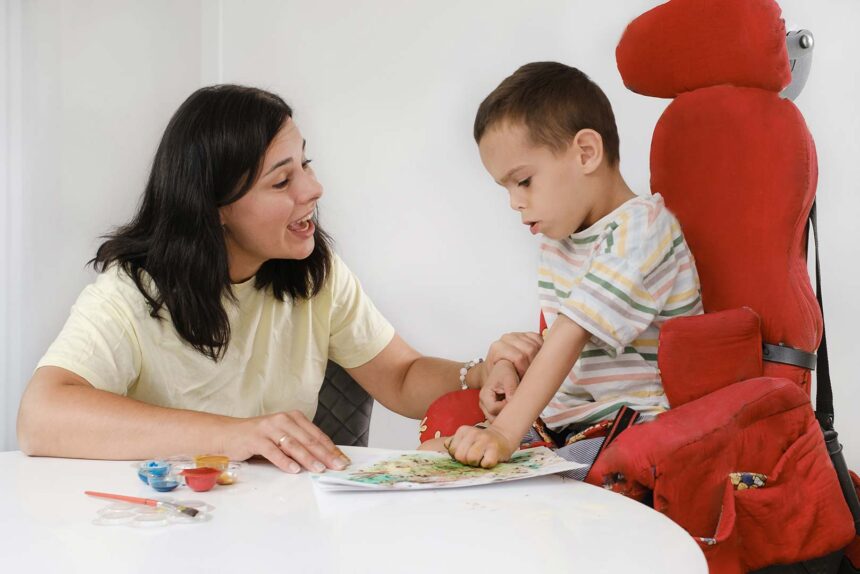
Children with cerebral palsy benefit most from activities that focus on inclusion, adaptability, and meaningful participation rather than limitation. Thoughtfully designed activities can support physical movement, communication, social interaction, and confidence while respecting each child’s unique abilities. Here’s more information on inclusive activities for children with cerebral palsy:
1. Adaptive Play and Games
Adaptive play involves modifying toys, rules, or environments to make games accessible for children with varying physical abilities. This approach allows children with cerebral palsy to participate fully alongside their peers. For instance, using board games with larger pieces can help children with limited fine motor skills grasp and move game components easily. Card holders can be utilized for card games, freeing up hands and allowing the child to focus on strategy rather than dexterity. In active play settings, using balls with bells inside aids children with visual impairments, while lighter, larger balls are easier to catch and throw for those with reduced muscle strength.
2. Creative Arts and Expression
Artistic activities offer a non-verbal outlet for expression and can be therapeutic for children with cerebral palsy. These activities encourage creativity while also working on fine motor skills and sensory processing in a low-pressure environment. Here are some activities caregivers can incorporate:
- Finger Painting: Using non-toxic, washable paints allows children to create art without the need to grip a brush.
- Adaptive Drawing Tools: Thick crayons, egg-shaped chalk, or markers with built-in grips make it easier for children to hold drawing implements.
- Clay Modeling: Working with soft clay or playdough helps strengthen hand muscles and improves dexterity.
- Music Therapy: Using simple percussion instruments such as shakers, tambourines, or drums enables children to participate in music-making.
- Digital Art: Various applications are designed specifically for accessibility, offering features such as voice commands or eye-tracking to control the artistic process.
Engaging in these creative pursuits helps children build confidence in their abilities. It also provides a tangible result that they can share with others, fostering a sense of accomplishment.
3. Inclusive Physical Activities
Physical activity is fundamental for maintaining physical health, improving muscle tone, and enhancing mobility. Inclusive physical activities are structured so that children with cerebral palsy can participate safely and effectively. Swimming is a highly beneficial activity because water’s buoyancy reduces the effects of gravity, allowing greater freedom of movement. Many community pools offer adaptive swim lessons or accessible entry points, such as ramps or lifts. Yoga is another activity that can be adapted for children with cerebral palsy. Instructors trained in adaptive yoga can modify poses to suit the child’s range of motion, using props such as bolsters and straps for support.
4, Sensory-based Activities
Sensory integration issues are common in children with cerebral palsy, making sensory-based activities a helpful tool for development. Here are some sensory-based inclusive activities:
- Sensory Bins: Containers filled with materials like rice, dried beans, sand, or water beads provide a contained space for tactile exploration.
- Light Play: Using light tables, glow sticks, or projectors creates a visually stimulating environment.
- Texture Boards: Boards with textures such as fur, sandpaper, velvet, and corrugated cardboard enable children to explore different sensations.
- Auditory Games: Listening to audiobooks, identifying sounds, or playing with sound-producing toys helps develop auditory processing skills.
- Aromatherapy Dough: Scented playdough combines tactile and olfactory stimulation.
Contemplate the child’s specific sensory needs and preferences when selecting these activities.
Schedule Your Cerebral Palsy Appointment
Inclusive activities play a key role in the physical and emotional development of children with cerebral palsy. Incorporating adaptive play, creative arts, physical exercises, and sensory experiences into their routine helps caregivers provide a rich and supportive environment. These activities address physical therapy goals and nurture the child’s social skills and self-confidence. Contact a qualified neurologist near you today to schedule your appointment.